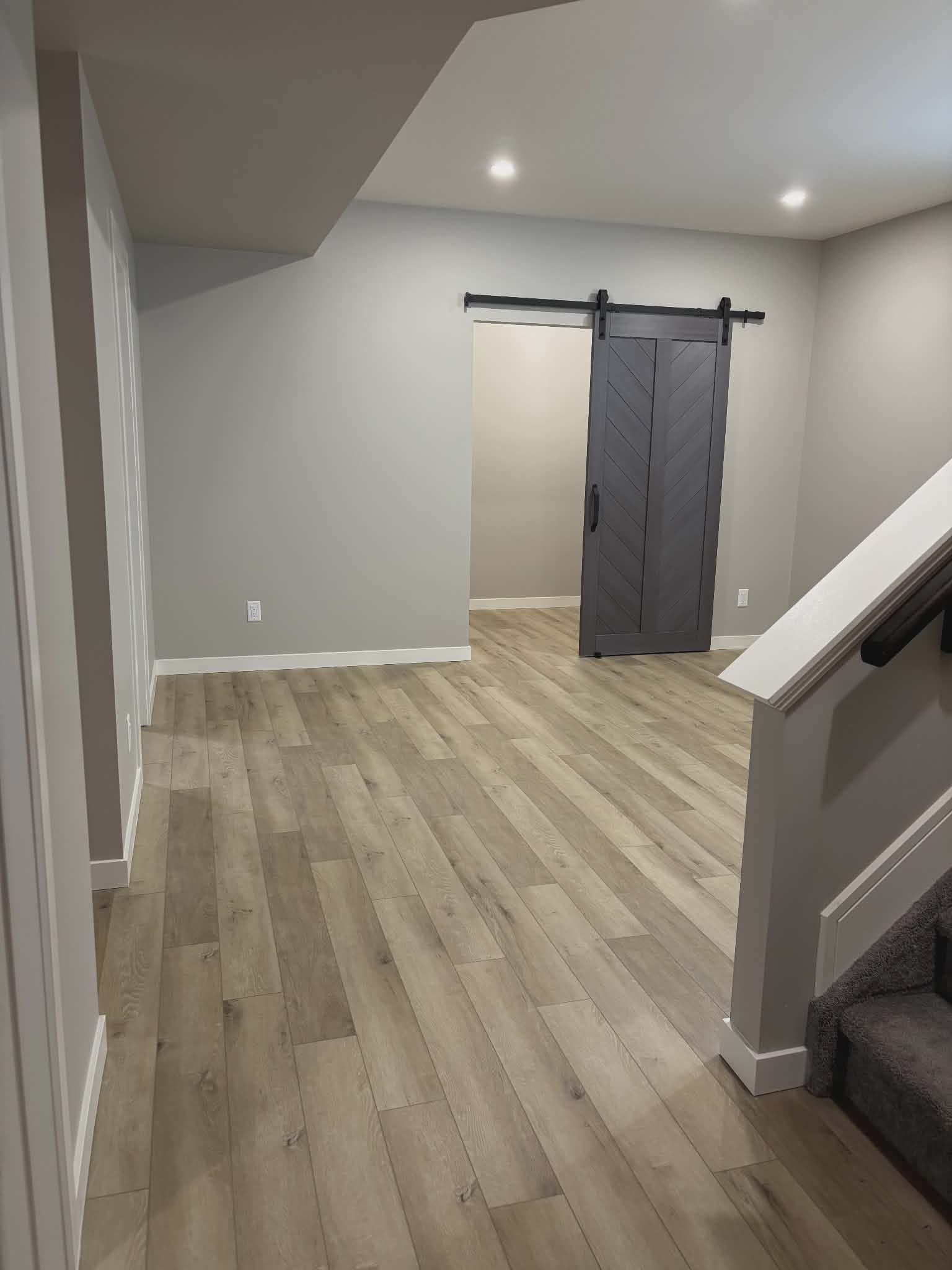

Edmonton Basement Development Cost: A 2026 Breakdown | Alpha-Omega
When homeowners start looking at basement development cost in Edmonton, the first thing they run into is the range. One quote comes back at $45,000. Another comes back at $90,000. A neighbour did theirs for $30,000. A coworker spent $130,000. All for basements that sound roughly the same on paper.
The range is real, and it is not random. Cost is set by scope, finishes, and the condition of the existing space, not by square footage alone. Two basements that are both 1,000 square feet can land $50,000 apart for reasons that have nothing to do with size and everything to do with what is inside the walls, what is being added, and what code requires once the work starts.
This piece breaks down where the money actually goes, what shifts a project from one tier to the next, and what is often missing from a quote that looks too good to walk away from. If you are still in the early thinking stage, our piece on
what to think about before starting a basement development covers the planning side first.
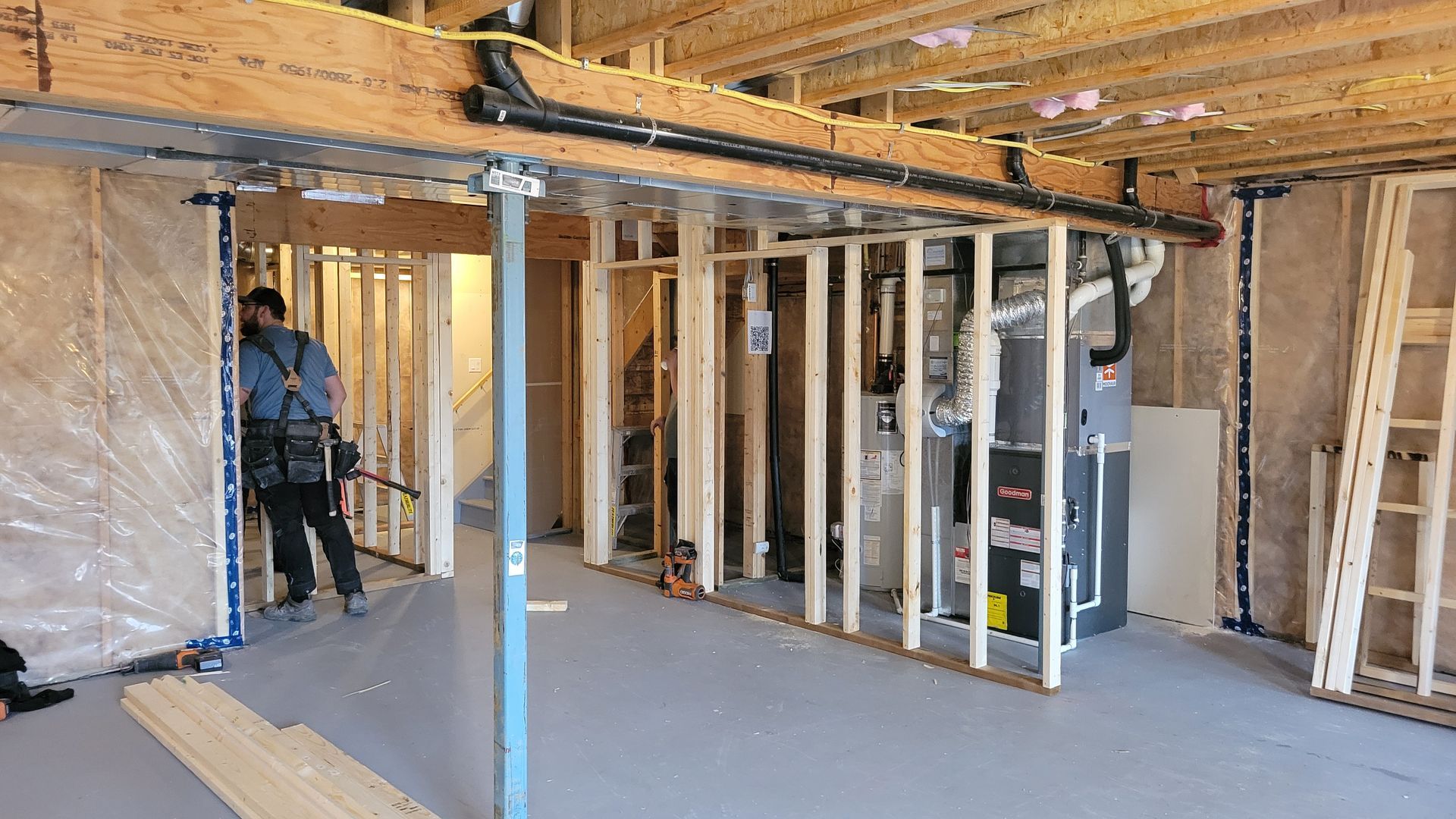
Why is the cost range for an Edmonton basement so wide?
Three things move the price more than anything else.
1. Scope. A 900 square foot open development with no bathroom and no bedrooms is a fundamentally different project from a 900 square foot two-bedroom legal suite with a separate entrance. Same square footage. Different work. Different price.
2. Finishes. A standard vinyl tub surround and builder-grade trim runs thousands less than a full tile shower with a glass enclosure and 5-inch baseboards. The framing behind both is identical. The visible parts make the difference.
3. Existing conditions. A 2015 build with smooth concrete, modern electrical, ceiling height over 8 feet, and bathroom rough-ins already in the slab is a faster, cleaner project than a 1972 home with low ceilings, old wiring, and no rough-ins in place. The work to bring the older space to current code adds real cost before the new finishing even begins.
When you see a quote at $45,000 and another at $80,000, the gap usually traces back to those three factors plus the scope of what was actually included in each quote. More on that further down.
What are you actually paying for in a basement development?
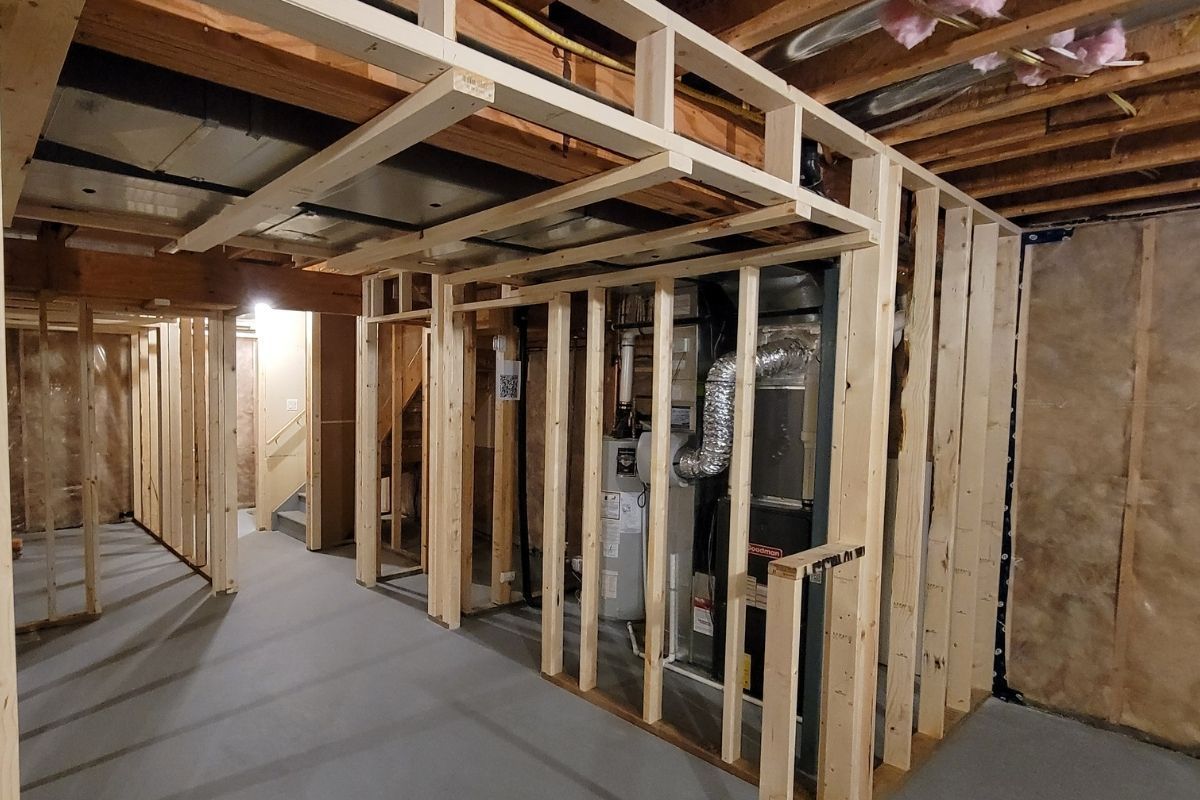
A basement development is a small home built underground. Framing, insulation, mechanical, electrical, plumbing, drywall, finishing, all of it has to come together in sequence. Each stage carries its share of the total.
For a typical 800 to 1,000 square foot Edmonton basement with one bathroom and two bedrooms, finished to a standard level, the cost breakdown looks roughly like this:
| Stage | Share of Total Budget |
|---|---|
| Permits and design | 2 to 5% |
| Framing and insulation | 12 to 18% |
| Mechanical rough-ins (HVAC) | 5 to 10% |
| Plumbing rough-ins and fixtures | 8 to 15% |
| Electrical (rough-in and finish) | 12 to 18% |
| Drywall, mud, tape, paint | 12 to 18% |
| Flooring | 8 to 12% |
| Bathroom finishes (tile, vanity, shower) | 8 to 15% |
| Doors, trim, finishing carpentry | 6 to 10% |
| Project management and cleanup | 3 to 5% |
On a $70,000 project, that puts electrical somewhere between $9,000 and $12,000, framing and insulation in the same range, and drywall similar. The biggest swings show up in bathroom finishes and flooring, since those scale most directly with material choices. A vinyl tub surround and standard LVP looks identical to a full tile bathroom and engineered hardwood on the framing diagram. The line items behind them are not the same.
Why this matters: when a homeowner sees a $65,000 quote and a $90,000 quote, the gap is rarely about one contractor overcharging. More often it is hidden in the bathroom and finishing line items, where one quote assumed builder-grade and the other assumed upgraded selections.
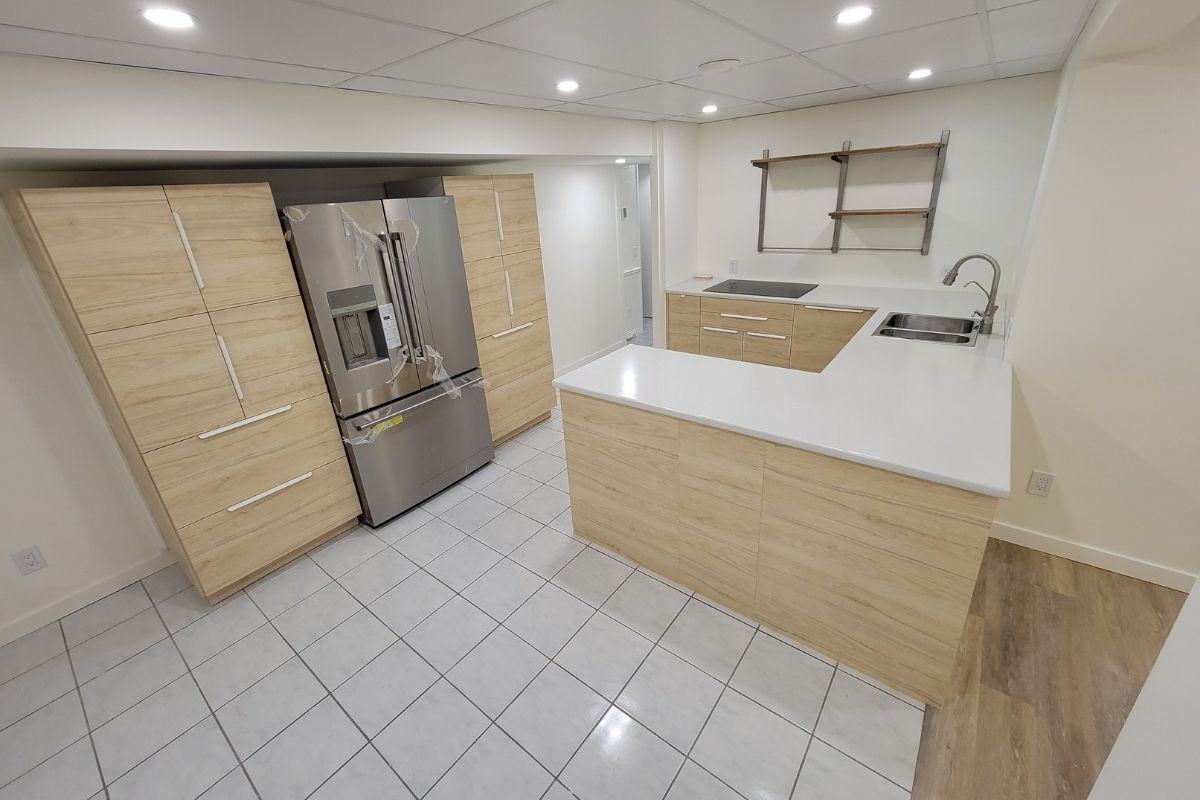
What does a basement development cost by project type in Edmonton?
Cost varies most by what is being built, not by how big it is. Here is a 2026 breakdown for a typical 800 to 1,000 square foot Edmonton basement, separated by project type.
Basement renovation (updating existing finished space)
A renovation reworks a basement that is already developed. New flooring, fresh paint, possibly a bathroom refresh, sometimes a layout change. The structure stays. The finishes change.
| Tier | Range |
|---|---|
| Cosmetic refresh only | $15,000 to $30,000 |
| Refresh with bathroom or kitchen update | $30,000 to $55,000 |
Basic basement development (no bathroom)
An open development of a previously unfinished basement. One large family room, some storage, maybe a flex space. No bathroom. No bedrooms requiring egress.
| Tier | Range |
|---|---|
| Standard finish | $40,000 to $55,000 |
Standard basement development (with bathroom and bedrooms)
The most common project. Full development with one bathroom, one or two bedrooms with code-compliant egress, family room, storage. Standard to mid finishes.
| Tier | Range | What it gets you |
|---|---|---|
| Low end | $55,000 to $65,000 | -Vinyl plank flooring -Vinyl tub surround -Basic LED pot lights -Knockdown ceiling -Builder-grade doors and trim -Single paint colour |
| Mid range | $65,000 to $80,000 | -Upgraded vinyl or laminate -Tile shower surround -More pot lights -Upgraded baseboards and casings -Two-colour paint -Basic built-ins |
| High end | $80,000 to $95,000+ | -Engineered hardwood or premium LVP -Fully tiled bathroom with glass enclosure -Custom built-ins -Accent walls -Premium doors and hardware -In-floor heat in bathroom -Wet bar |
Legal basement suite
A code-compliant secondary suite. Separate entrance, full kitchen, fire-rated separation, dedicated mechanical, sub-panel, and all the additional structural and code requirements that come with a registered suite.
| Tier | Range |
|---|---|
| Standard legal suite | $95,000 to $135,000+ |
High-end custom development
Engineered hardwood, custom built-ins, wet bar, fully tiled bathroom, in-floor heat, premium finishes throughout, sometimes a home theatre or gym.
| Tier | Range |
|---|---|
| Custom finish level | $100,000 to $150,000+ |
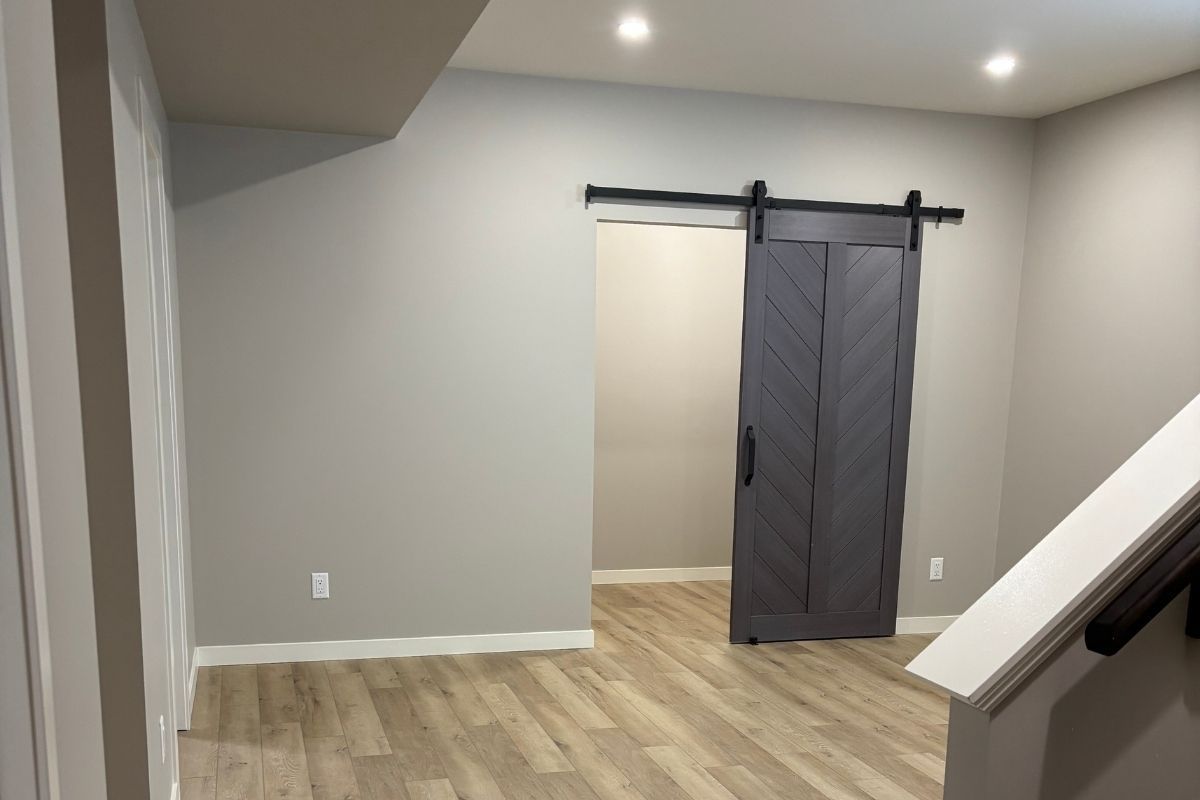
What shifts a project from one tier to the next: bathroom finish level (vinyl surround versus full tile), flooring choice, ceiling type (T-bar is cheaper than drywall), built-in carpentry, lighting density, and how much the new layout deviates from existing mechanical positions.
Why can two quotes for the same basement differ by $30,000?
This is the question every homeowner has after collecting three quotes and finding they range from $50,000 to $85,000. The answer is rarely that one contractor is overcharging. The answer is almost always that the quotes are not actually for the same project.
Here is what tends to quietly disappear in a lower quote:
- Permits (listed as "by owner" or simply excluded)
- Proper insulation detailing to meet R-12 code minimum
- Vapour barrier with sealed penetrations and taped seams
- Soundproofing between floors or rooms
- Bathroom finish allowance (tile versus vinyl surround, glass versus curtain rod)
- Two coats of paint versus one, and a painted ceiling versus knockdown only
- 5-inch baseboards versus 3-inch
- Solid core doors versus hollow flush
- LED pot lights at proper spacing versus basic builder fixtures
- A written workmanship warranty versus nothing
- Journeyman labour throughout versus labourers with a journeyman signing off at inspection
Permits and code compliance
Permits are often the first line item that disappears. They may be listed as "by owner," skipped entirely, or treated as a construction extra. Insulation is similar.
Alberta code requires R-12 effective minimum on basement exterior walls, and a cheaper quote may assume batt only without the proper detailing that actually meets that standard.
Vapour barrier work follows the same pattern.
Sealed penetrations and taped seams are what prevent moisture problems years later, and they are easy to leave out of a quote without anyone noticing until the walls are already closed.
Finish and bathroom allowances
This is where the biggest dollar gaps usually show up. A low quote tends to assume builder-grade everything: vinyl tub surround, basic vanity, chrome fixtures, no tile.
A higher quote may have written in a tile shower, an upgraded vanity, and a glass enclosure. Same line on the spreadsheet, very different cost.
Paint coverage hides in a similar place. Ceiling painted versus knockdown only, one coat versus two, these are real line items.
Trim height and door quality work the same way. A 3-inch base and hollow flush doors cost less than 5-inch base and solid core, and a low quote will default to the cheaper option unless the scope specifies otherwise.
Trade quality and warranty
Some quotes use full journeymen throughout the project. Others use labourers with a journeyman signing off at inspection. The end result usually passes, but the consistency of the work and how it holds up over time are not the same. Warranty sits in the same category.
A written one-year workmanship warranty is either in the quote or it is not, and a low quote often has nothing in writing.
A low quote is rarely a deal. It is usually the same project minus things the higher quotes included. Before signing anything, ask each contractor to itemize what is included.
An apples-to-apples comparison only works when both quotes describe the same actual project.
What does Edmonton specifically add to a basement development budget?
Three Edmonton-specific factors that homeowners often underestimate: permits, egress windows, and the realities of older homes.
Edmonton permit costs in 2026
Permits are not optional for any basement development that adds a bedroom, bathroom, kitchen, mechanical, or electrical work. They are also not the budget-buster some homeowners fear.
| Permit | Typical Cost |
|---|---|
| Development permit (basic basement) | $0 (often waived) |
| Development permit (legal suite) | $200 to $500+ |
| Building permit | $125 minimum, scales with construction value |
| Electrical permit | $200 to $400 |
| Plumbing permit (if adding bathroom or kitchen) | $200 to $400 |
| HVAC permit (if mechanical changes) | $100 to $200 |
| Total for standard development | $500 to $1,500 |
| Total for legal suite | $1,500 to $3,000+ |
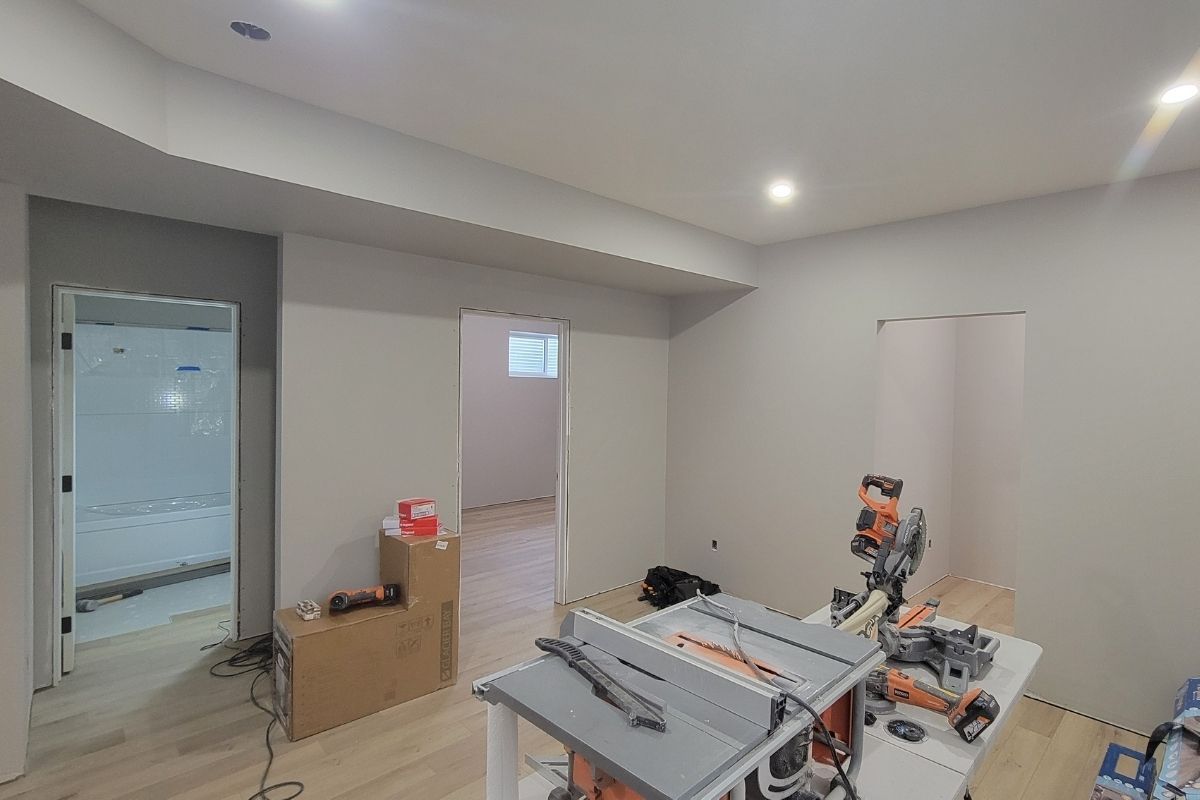
What pushes permit costs higher: higher declared construction value, secondary suite designation, engineered drawings required for structural changes, variance applications outside zoning standards, and re-inspection fees if a stage fails. On a recent project, an electrical inspection initially failed due to an interpretation issue, was corrected, and the project moved forward. Re-inspection fees can run a few hundred dollars per occurrence.
Egress windows: when are they required and what do they cost?
Alberta Building Code requires egress (emergency escape) windows in any room used as a bedroom. The opening must meet minimum clear dimensions, and the window well must allow safe escape. If you are adding a bedroom and there is no existing egress window in that location, the cost adds up fast.
Per window:
| Component | Cost |
|---|---|
| Concrete cutting and shoring | $800 to $1,500 |
| Window unit (code-compliant size) | $400 to $1,200 |
| Window well (galvanized or composite) | $300 to $800 |
| Install, framing, sealing, finishing | $300 to $700 |
| Total per window | $1,800 to $4,200 |
Two-bedroom plans usually mean two egress windows unless one bedroom already has a code-compliant opening. Older homes with original small basement windows almost always need new egress cuts.
Older Edmonton home versus newer build: same project, different price
Same square footage, same scope, same finish level, different home, different cost.
| Issue | Typical Cost Impact |
|---|---|
| Lower ceilings (sometimes under 7 feet) | Creative bulkhead work, sometimes downsized scope |
| Aging plumbing (galvanized, cast iron) | Partial replacement $2,000 to $8,000 |
| Old wiring (knob-and-tube, aluminum, ungrounded) | Rewiring $3,000 to $10,000 |
| Asbestos risk (popcorn ceiling, vermiculite insulation) | Testing and abatement $1,500 to $6,000 if positive |
| Foundation parging or crack repair | $1,000 to $5,000 |
| Below-code insulation in existing exterior walls | Re-insulation $2,000 to $5,000 |
| Existing rough-ins not in modern positions | Re-routing $1,500 to $5,000 |
| Timeline impact | 2 to 4 weeks longer typical |
Same scope, same square footage, an older Edmonton home can run $10,000 to $25,000 more than a newer build. This is one of the most common reasons two homeowners with similar plans land at very different prices.
What is often NOT included in a typical basement development quote?
Sticker shock after work starts is almost always tied to assumptions about what is and is not included. Here is what most basement development quotes leave out by default.
| Item | Typically Included? |
|---|---|
| Paint (one wall colour, one coat) | Usually yes, sometimes ceiling only |
| Multiple paint colours | Often extra |
| Window coverings, blinds | No |
| Furniture | No |
| Appliances (for suite kitchen) | No, unless specifically quoted |
| TV mounting and wiring | Rough-in only, no install |
| Smart home devices, security systems | No |
| In-ceiling speakers | Wiring rough-in possible, install separate |
| Custom built-ins beyond closets | Usually extra |
| Owner-supplied specialty fixtures | Owner-purchased |
| Permit fees (sometimes) | Varies. Always ask. |
| Engineering or structural drawings | Varies |
| Disposal bins beyond standard | Sometimes extra |
The fix is simple: ask. Any contractor quoting a basement should be willing to itemize exactly what the price covers. If a quote does not break this out, that is information itself.
What makes a legal basement suite cost so much more?
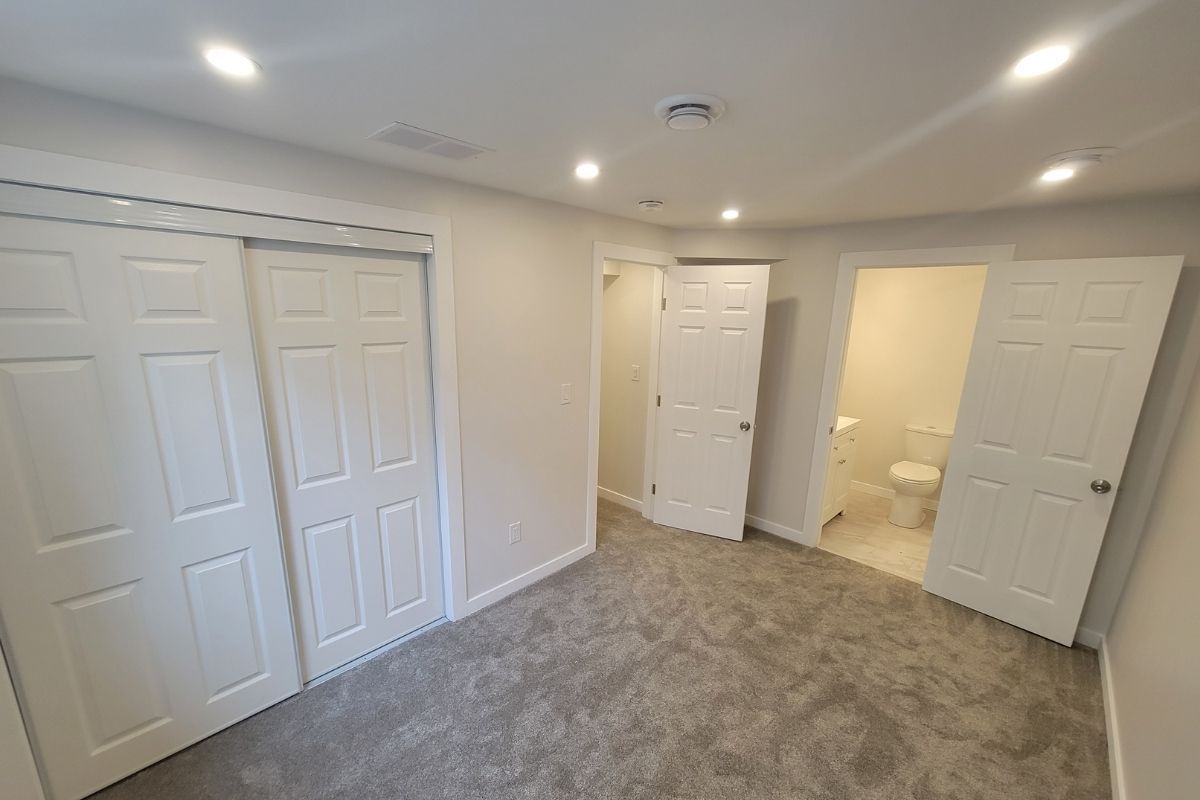
A legal suite typically costs $30,000 to $55,000 more than a standard development of the same square footage. The added cost is not in the finishes. It sits in the code requirements that come with creating a second registered dwelling unit inside an existing home. Four areas drive most of the increase.
Fire separation
Code requires a fire-rated assembly between the suite and the upper dwelling. In practice that means 5/8" Type X drywall (sometimes double-layered depending on the assembly), proper firestopping at every penetration, and fire-rated self-closing doors at any door between the units. This is not a finish upgrade. It is a code requirement with no workaround.
Typical add: $4,000 to $8,000
Separate mechanical
The suite needs its own ventilation, its own heating control, and code-mandated kitchen exhaust to exterior. Depending on what is already in place, that can mean zoning the existing furnace, adding new ductwork, or installing a separate unit. The existing furnace size and age matters here. If it cannot handle the added load, it becomes part of the scope.
Typical add: $3,000 to $8,000
Dedicated electrical
A legal suite typically needs its own sub-panel, dedicated branch circuits for the kitchen, and interconnected smoke and carbon monoxide detectors across both units. The main service may also need upgrading from 100A to 200A, which is the variable that swings this number most significantly from one home to the next.
Typical add: $2,500 to $10,000
Soundproofing
Not strictly code-required in all cases, but most homeowners add it once they understand what living above an untreated floor assembly actually sounds like. Resilient channel, double drywall, Roxul Safe and Sound insulation, and sealed penetrations address most of it. It is worth including from the start rather than retrofitting later.
Typical add: $5,000 to $10,000
Other suite-specific costs
| Item | Typical Add |
|---|---|
| Full kitchen (cabinets, counter, appliances rough-in) | $10,000 to $20,000 |
| Separate exterior entrance (if not existing) | $5,000 to $15,000+ |
| Egress windows (if not existing) | $1,500 to $3,500 each |
| Engineered drawings and additional permits | $1,000 to $3,000 |
When a basement isn't realistic as a legal suite
Not every home can support a legal suite without major structural reworking. The deal-breakers worth flagging during a walkthrough:
- Ceiling height below 6'5" in habitable rooms (Alberta code minimum for a suite)
- No practical way to add a second exit
- Lot zoning that does not permit secondary suites
- Setbacks that will not accommodate a separate entrance
- Main electrical service that cannot be upgraded to handle the load
- Foundation issues requiring remediation before any finish work
- Parking requirements that cannot be met (most zones require off-street parking for suites)
If you are set on a suite, the first call is to confirm zoning. Everything else flows from there.
Should you DIY part of your basement development?
Many homeowners consider doing some of the work themselves. Done well, it can cut thousands. Done poorly, it can cost more than hiring it out from the start.
Where DIY genuinely saves money
| Task | Savings | Risk |
|---|---|---|
| Demo (non-structural) | High | Low |
| Painting (after trades finish prep) | High | Low |
| Closet build-outs and shelving | Moderate | Low |
| Final cleanup and site prep | Moderate | Low |
| Flooring (LVP, click-lock laminate) | Moderate | Medium |
| Trim installation (if patient and tooled) | Moderate | Medium |
Where DIY usually costs more than it saves
| Task | Why |
|---|---|
| Electrical | Sub-code work fails inspection, must be redone by a journeyman. Fire and life-safety implications. Insurance and resale considerations. |
| Plumbing | Leaks discovered behind walls months later cost more than the original install. Venting, traps, and fixture codes are easy to miss. |
| Framing | Improper bearing, missing fire-blocking, or non-code stud spacing cascades into drywall and finish problems. |
| Drywall mud and tape | Takes years to learn well. Amateur tape work shows under any side lighting. |
| HVAC modifications | Improper duct runs hurt furnace performance. Code violations on combustion air and venting are safety issues. |
| Insulation and vapour barrier | Improperly installed vapour barrier traps moisture in the wall cavity. Usually not discovered until mould appears. |
The honest take: DIY is a real money-saver in the right places. It becomes a money-loser the moment it touches anything that gets inspected, anything inside a wall, or anything that affects long-term durability.
The savings on a $1,500 DIY drywall job evaporate the first time a $4,000 fix is needed afterward.
What do we look at during a basement walkthrough that signals cost?
Before any number gets quoted, we walk the space. Here is what we look at and what each thing tells us.
Signs that a basement will cost more than typical
- Ceiling height under 8 feet
- Mechanical room placement that crowds the layout (furnace, ducts, panel in awkward positions)
- Existing finished work that requires demolition before new framing
- Foundation signs (cracks, efflorescence, white powder, dampness)
- Old electrical panel (60A, 100A in a larger home, knob-and-tube anywhere)
- Stairwell access tight or narrow (material handling becomes a real issue)
- Sloping or uneven slab
- No existing egress windows where bedrooms are planned
- Galvanized plumbing visible
- Furnace size that cannot handle the added finished space
Signs that a basement will be straightforward
- 8'6" or taller ceilings throughout
- Mechanical room in one corner, accessible, with clear runs
- Modern panel with spare capacity (200A typical)
- Existing egress windows in the right locations
- Concrete in good condition, no signs of moisture
- Existing bathroom rough-ins already in the slab (typical in newer builds)
- Clean, dry, accessible space with reasonable working room
Standing in the space tells us more than any drawing can. Two basements with identical floor plans can carry very different price tags once you account for what is actually there.
How does Alpha-Omega Developments price a basement?
We walk the space first. Always.
That walk includes measuring ceiling heights, looking at the panel, checking the mechanical room, identifying existing rough-ins, noting concrete condition, reviewing your goals for the space, and flagging any code constraints that affect what is possible.
From there, we put together a scoped quote that itemizes what is included. Not "basement development, $75,000." A real line-item breakdown of framing,
electrical, plumbing, drywall, finishing, bathroom allowance, paint allowance, permits, and warranty. So you can compare it line by line against any other quote you have collected.
If you want to see what the work itself looks like once it is underway, our
recent project breakdown walks through a full Edmonton basement development from concrete to final walkthrough.
Frequently asked questions about Edmonton basement development costs
How much does a basement development cost in Edmonton in 2026?
Most Edmonton basement developments cost between $40,000 and $75,000, depending on whether the plan includes a bathroom and bedrooms and the finish level chosen. High-end finishes can push a standard development past $80,000. Legal basement suites start around $95,000 and can climb past $135,000.
How much do permits cost for a basement development in Edmonton?
Typical total permit cost for a standard basement development is $500 to $1,500. A legal suite runs $1,500 to $3,000 or more. The building permit alone starts at $125 and scales with construction value.
Is a basement development worth the cost?
It depends on your goals. Added living space, rental income from a legal suite, and resale appeal all carry real value. Going in with realistic expectations about scope, finishes, and the condition of your existing space is the difference between a project that feels worth it and one that does not. Skipping the planning stage is usually where regret comes from, not the price tag.
How long does a basement development take in Edmonton?
A standard development typically takes 6 to 10 weeks once permits are pulled. Legal suites run 10 to 16 weeks. Older homes or projects with surprise scope (asbestos, foundation work, wiring upgrades) push timelines longer.
What is the difference between a basement renovation and a basement development?
A home renovation updates an existing finished basement. A development finishes a previously unfinished basement from concrete up. Developments involve more trades, more inspections, and a longer timeline. Renovations are typically faster but can carry surprise costs once existing walls open.
Do I need separate permits to add a bathroom to my basement?
Yes. Adding a bathroom requires plumbing and electrical permits at minimum. If the bathroom is in a new bedroom, an egress window may also be required. A reputable contractor will pull these for you and roll the cost into the quote.
Can I do part of my basement development myself to save money?
Yes, but only on tasks that do not get inspected and do not sit inside a wall. Demo, painting, flooring, and trim are reasonable DIY zones. Electrical, plumbing, framing, drywall mud and tape, HVAC, and insulation are not. Mistakes in those areas usually cost more to fix than the original install would have cost professionally.
What is the cheapest way to develop a basement in Edmonton?
The cheapest legitimate path is an open development with no bathroom, no bedrooms, builder-grade finishes, and a project taken on by a full crew rather than self-managed. Cutting corners on permits, insulation, or trade quality usually costs more in the long run through inspection failures, code-compliance issues at resale, or repair work down the road.
Ready For A Basement Walkthrough?
When you are ready, we walk the space first, then price it. If you want to see how a basement development moves from planning to finished space, the
basement developments page covers our full service, and our
recent Edmonton project walkthrough shows what the work actually looks like start to finish.

Need a Quote?
Reach out to our team today for a quote or to discuss your next project.
Or call us at:
Recent Posts