
Basement Layout Planning in Edmonton: Real Life, Not Just on Paper
By the time layout planning begins, most homeowners already have a clear picture of the finished basement. You can usually describe how you want it to look, how it should feel, and how you expect to use the space day to day.
What is harder to picture is how those ideas translate into a real, buildable layout, and whether the space will still function once structure, mechanical systems, and building code are factored in.
This is where a basement development can start to succeed or quietly fall short. Layout planning is less about design choices and more about making sure the space works in real life, not just on paper.
If you are still early in the planning process, our guide on
what to think about before starting a basement development in Edmonton outlines the key decisions to consider first.

Designing for Movement, Not Just Rooms
Once a layout starts taking shape, attention shifts to how movement will actually work within the space. This goes beyond room labels and focuses on how people, furniture, and everyday items move through the basement once it is finished.
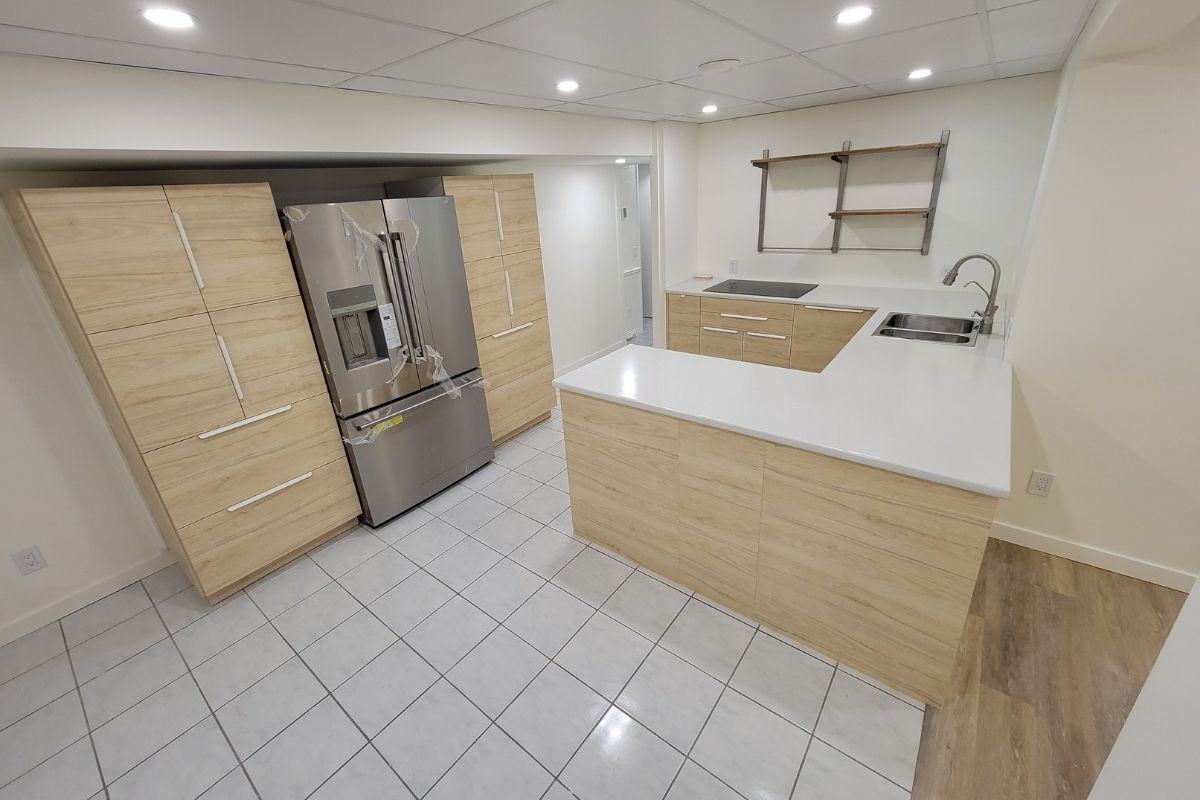
At this stage, details like hallway widths, door swings, tight corners, and access paths start to matter. Layouts are reviewed with real use in mind, including how furniture is brought downstairs, how appliances are moved into place, and whether storage areas can be accessed without frustration.
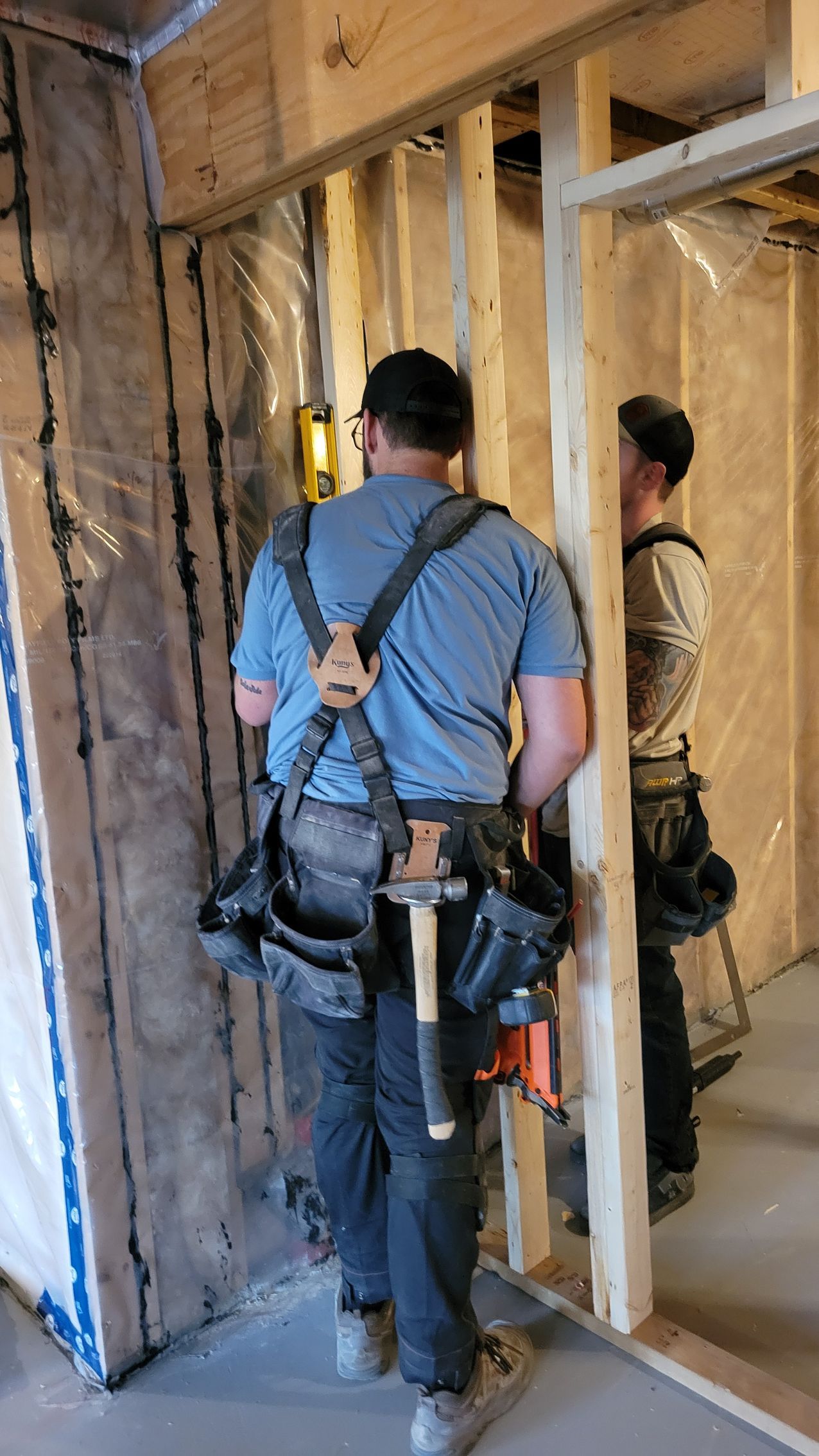
A layout can meet all minimum requirements and still feel uncomfortable if movement has not been carefully thought through. Addressing these issues while the layout is still flexible is far simpler than trying to correct them after
framing and finishes are in place.
This kind of layout refinement is a core part of our basement development process, where flow, access, and long-term usability are worked through before construction begins.
Mechanical and Electrical Clearances That Shape the Layout
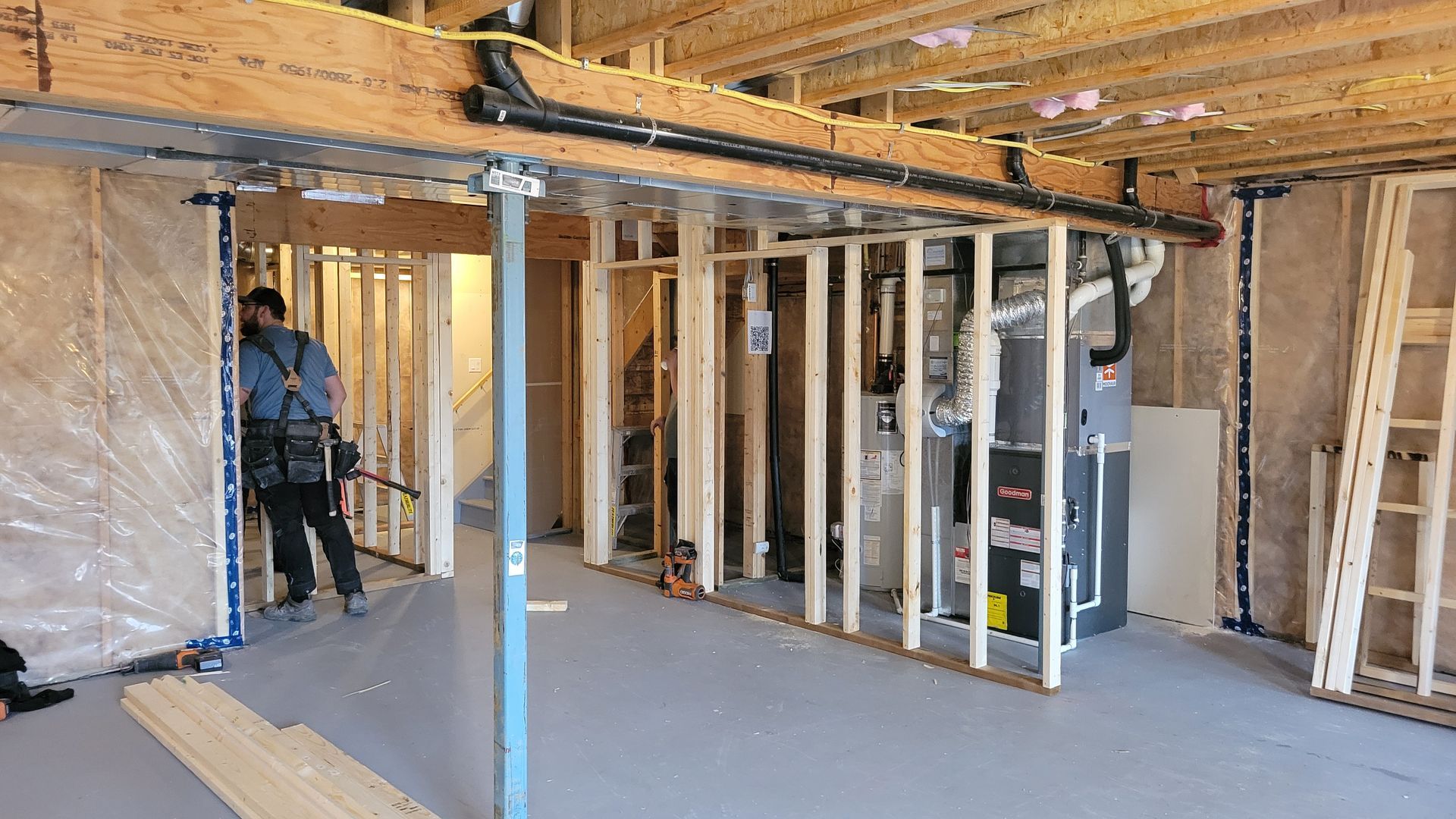
Mechanical areas often play a direct role in how a basement layout comes together. Furnaces,
electrical panels, and water heaters all require specific working clearances, and access cannot be blocked by permanent walls. Electrical panels also need to remain accessible, even if they are visually integrated into the finished space.
As layouts are refined, these requirements are accounted for without automatically giving up usable square footage. In many cases, hallways or adjacent spaces can be positioned to satisfy clearance needs, or custom solutions can be built that keep everything accessible and code compliant.
How these areas are handled has a noticeable effect on how the basement feels once it is finished. When clearance and access are planned into the layout properly, mechanical spaces fade into the background instead of becoming ongoing frustrations.
Working Around Structure Without Making the Space Feel Boxy
Structural elements like teleposts, beams, and ductwork play a significant role in how a basement layout comes together. These elements need to be accounted for in a way that supports the overall feel of the space.
Decisions often revolve around whether posts can be integrated into walls or features instead of being boxed out, whether a drywall ceiling makes sense given the ductwork above, and how bulkheads will affect ceiling height and consistency. In some cases, slightly lowering the ceiling can create a cleaner, more uniform result. In others, it can make the space feel tight if not handled carefully.
A layout can appear functional at first, and still feel uncomfortable once structure and ceiling heights are resolved. Resolving these trade-offs within the layout helps the space feel consistent and deliberate, instead of visually uneven or awkward once finished.
You can see how these structural and layout decisions came together in a
recent full basement development project we completed in Edmonton.
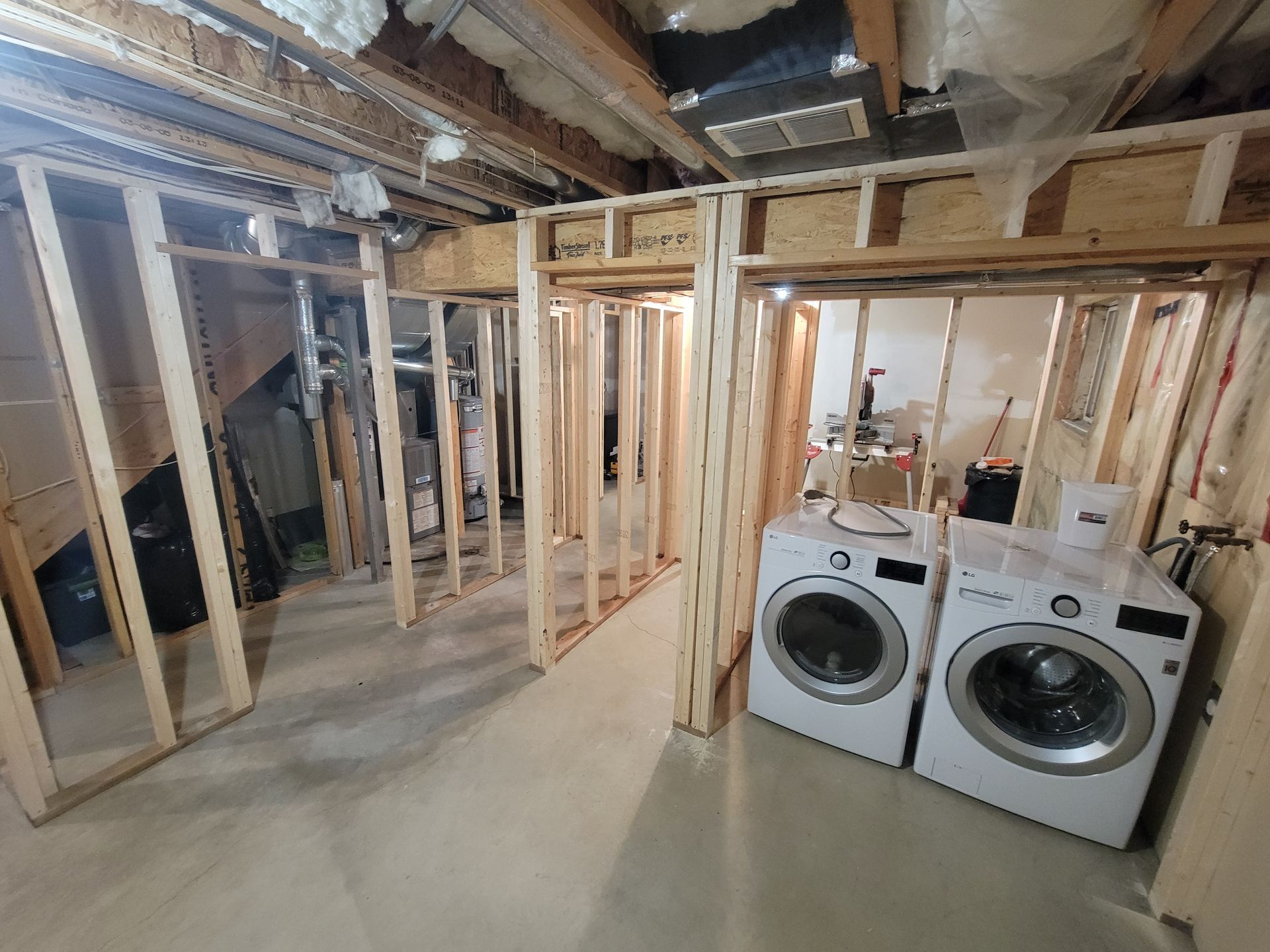
Storage and Laundry: The Spaces That Affect Daily Use the Most
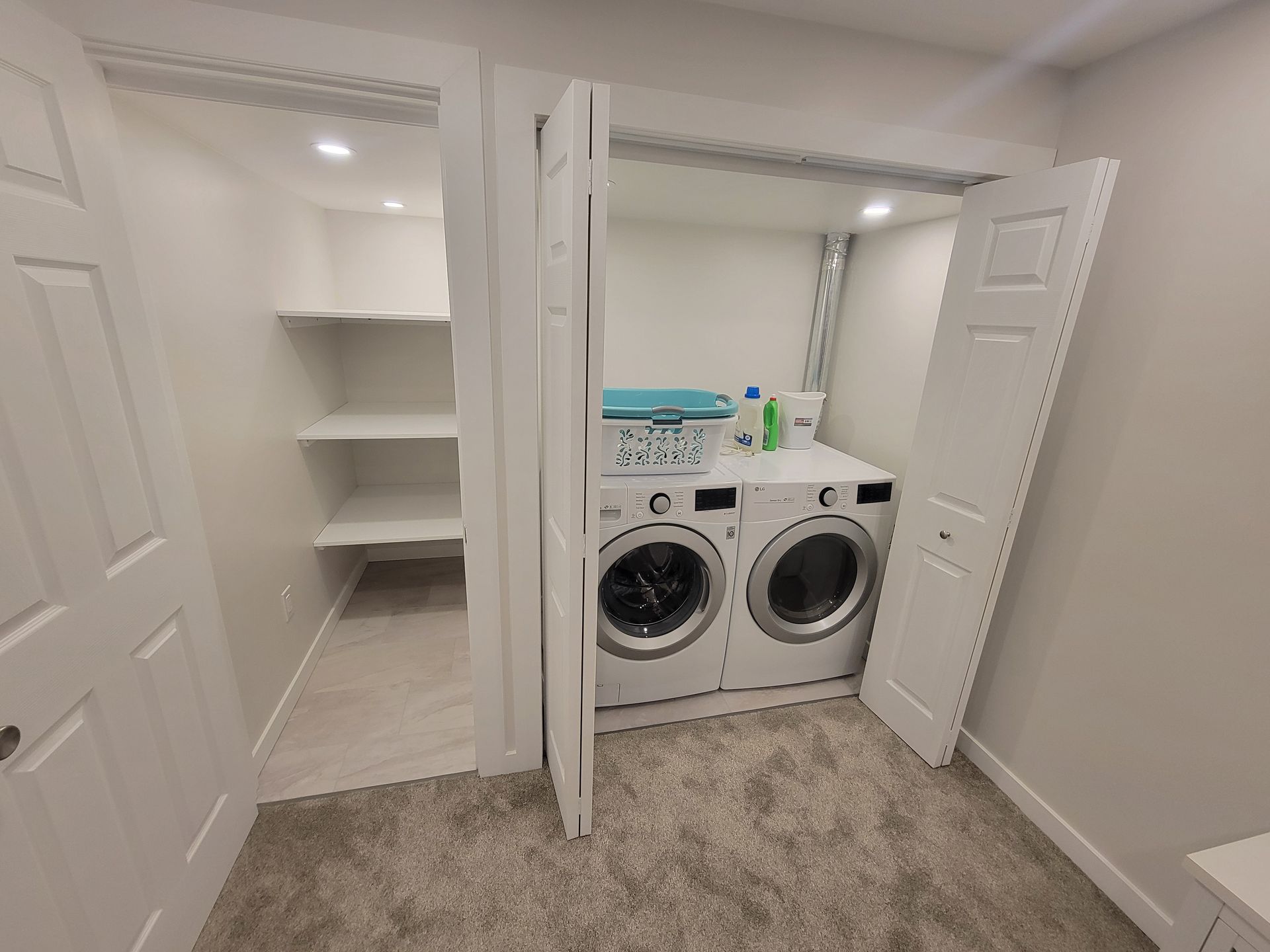
Storage and laundry areas often have a bigger impact on how a basement functions than their square footage would suggest. When they are treated as leftover space, they may work on paper but fall short in day-to-day use.
Storage commonly ends up as a single closet that technically exists but is awkward to access. During layout planning, attention shifts to how storage will actually be used, including:
- Where storage is accessed from in relation to the main living areas
- How doors swing and whether they interfere with movement or access
- How shelving and depth line up with the way items are actually stored
Small adjustments in access or orientation can turn limited space into storage that feels easy to use instead of frustrating.
Laundry areas require the same level of attention. Clearance around machines, depth for shelving, and space for folding or hanging all affect how usable the room feels. A laundry layout can technically fit within a space and still feel cramped if these details are not worked into the layout itself.
These are not major design features, but they are the kinds of decisions that noticeably affect how comfortable the basement is to live in every day.
Keeping Finishes Simple While Getting the Layout Right
At this point in the process, most homeowners are not focused on decorative details, and that is completely reasonable. The priority is usually to keep finishes consistent with the rest of the home and make sure the layout functions well.
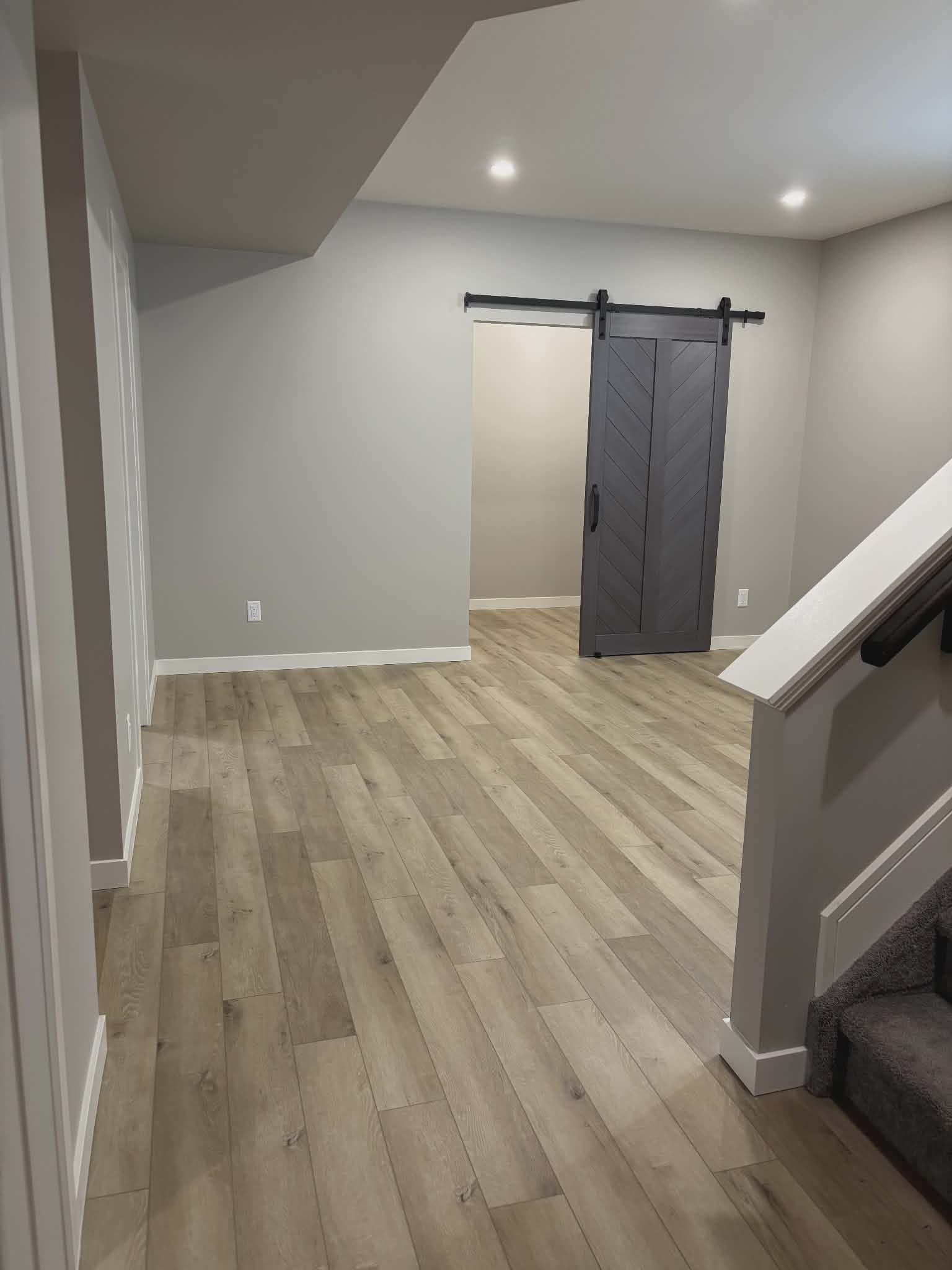
Simple, familiar choices like flat stock trim, pot lights, drywall ceilings, and clean lines tend to work very well when the space is laid out properly. When flow, access, and proportions are handled correctly, these finishes feel intentional rather than basic.
A basement that moves comfortably and feels easy to use will always be more enjoyable than one that relies on upgraded finishes to compensate for layout limitations.
Why Layout Planning Is a Practical Exercise, Not a Design One
Layout planning is not about choosing colors or fixtures. It is about confirming that the basement functions properly before finishes are added.
When structure, mechanical systems, access requirements, storage needs, and long-term use are accounted for within the layout, the rest of the build becomes more straightforward. Design decisions are easier to make, construction moves cleaner, and compromises are reduced.
When this step is handled well, the basement does not just look finished. It feels comfortable to use, easy to move through, and practical to live in for years without needing workarounds.
Ready to Make Sure Your Basement Layout Actually Works?
Before walls are framed and finishes are chosen, a layout review helps confirm that movement, access, and day-to-day use have been properly thought through.
If you are planning a
basement development in Edmonton or a
home renovation and want practical input on how your layout will function once it is built, reach out to Alpha-Omega Developments to book a walkthrough.

Need a Quote?
Reach out to our team today for a quote or to discuss your next project.
Or call us at:
Recent Posts