
Edmonton Basement Planning: What to Think About Before You Start
If you’re thinking about finishing your basement, you’re probably focused on the end result. How many rooms you want, where the bathroom will go, and how the space should look when it’s done.
What most homeowners don’t realize is that many of the most important decisions are made long before permits, pricing, or construction ever begin.
That first visit to the space sets the foundation for everything that follows. It’s often where good projects are shaped and where future problems can be avoided before they ever exist.
Standing in an unfinished basement, the focus goes beyond what can be built or which finishes you’ll choose. What matters just as much is how the space will actually be used, how it will feel day to day, and if the layout you’re discussing will still make sense years down the road.
This early planning stage is where experience has a major impact, because small decisions made here influence everything that comes next.
What does an experienced contractor look for during the first basement walk-through?
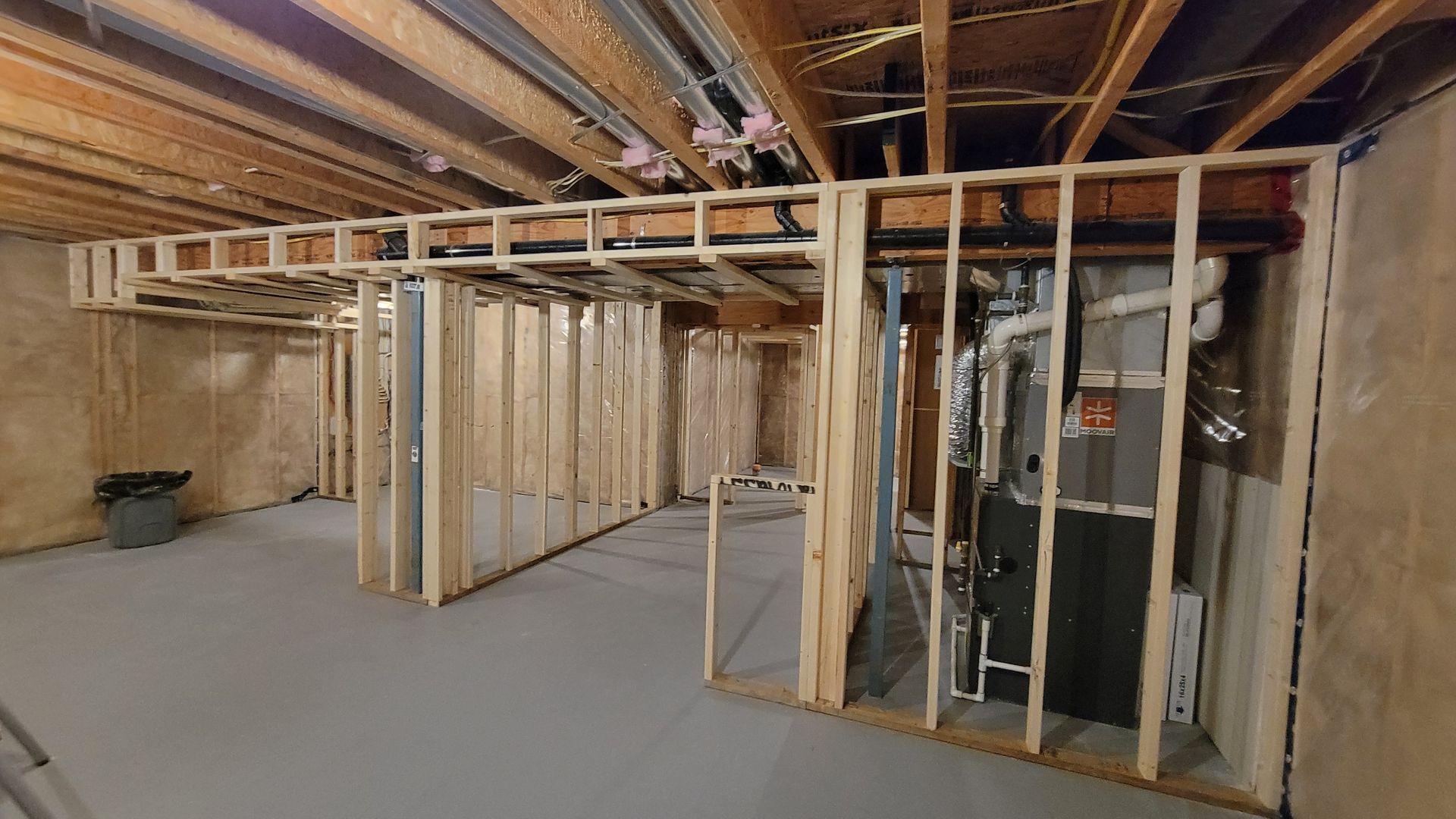
When we walk through your basement for the first time, we’re not there to rush into layout drawings or talk numbers right away. The focus is on understanding how the space can realistically function once it’s finished, not just how it looks on paper.
As we go through the basement together, we’re already picturing it as a finished space. We’re looking beyond walls and room labels and thinking about how you’ll actually live in it.
That means paying close attention to how people move through the space, how rooms connect, where plugs and switches go, and where small layout decisions could create long-term frustrations if they aren’t thought through early.
If you want to go deeper on how those decisions get worked through before framing starts, we cover the full layout planning process in how to plan a basement layout that works in real life, not just on paper.
How you enter and move through the basement
One of the first things we look at together is how you naturally enter the basement from the stairs and where that transition places you in the space.
This often becomes clear right away with stair access. On paper, placing a door directly at the bottom of the stairs with a tight turn can seem perfectly fine. Standing in the space, it’s easier to see how awkward that setup can feel once the basement is finished.
We’re thinking about how furniture gets moved in, how appliances get downstairs, and how construction materials need to pass through the space during the build.
How rooms connect and flow together
From there, attention shifts to how the rooms relate to one another.
This includes door placement, hallway widths, and whether certain turns or transitions are going to feel tight or uncomfortable once the space is in use. A layout can technically work and still feel awkward to live in if flow isn’t considered carefully.
Talking through these connections early helps surface potential issues before they become permanent. Fixing flow problems later usually means rework. Catching them during planning is far simpler and helps avoid unnecessary changes once construction begins.
What do homeowners usually miss during early basement planning?
Most homeowners come into planning with a clear picture of the finished space. You’re imagining rooms, furniture, and how the basement will look once everything is done.
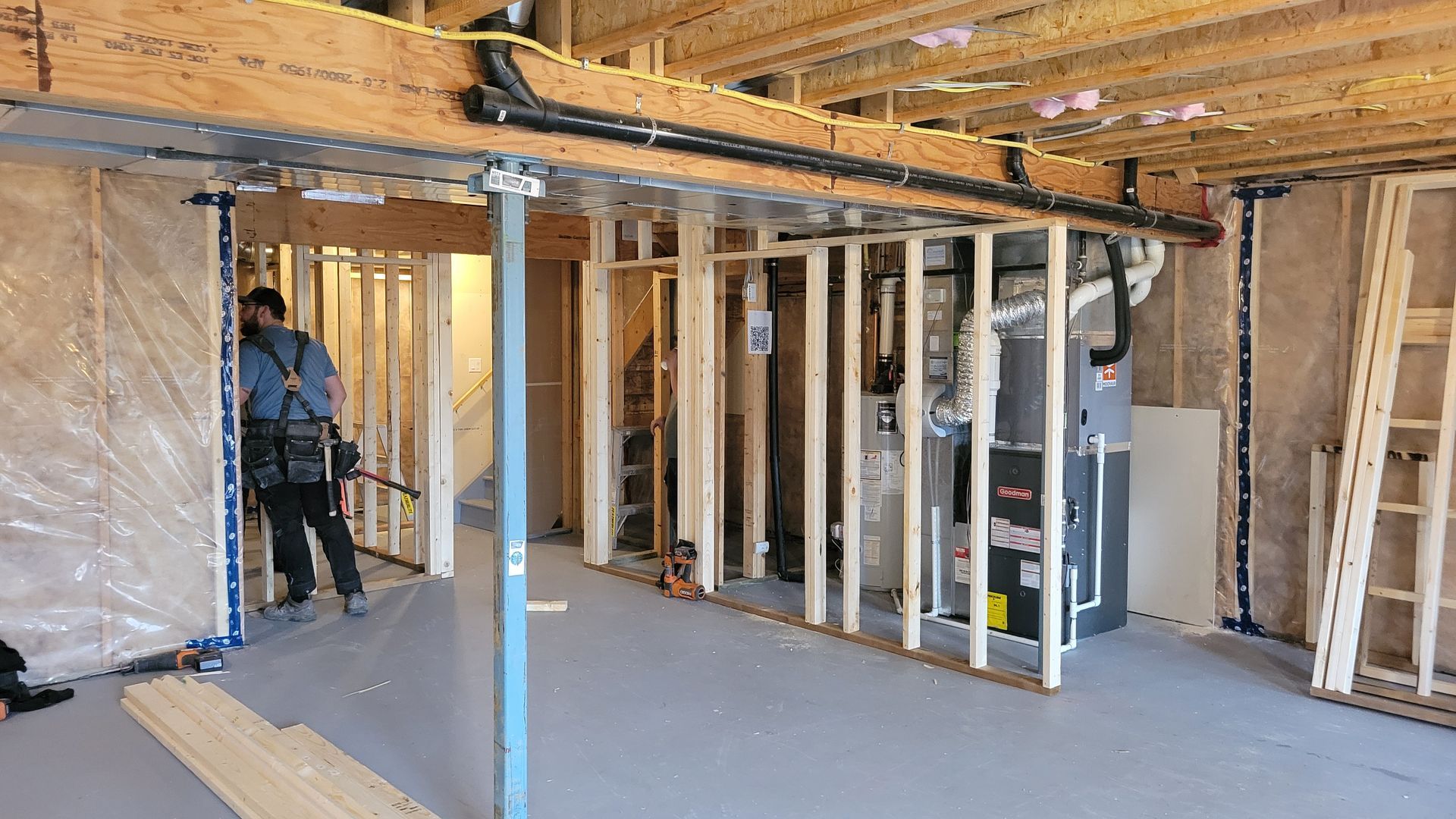
What’s harder to see at that stage is everything that has to happen behind the walls to make that vision work once construction begins. That’s where early guidance becomes especially valuable.
Balancing how the space feels with what code requires
As we talk through your basement together, usability is still the main focus. At the same time, building code is always part of the conversation, even when it isn’t obvious.
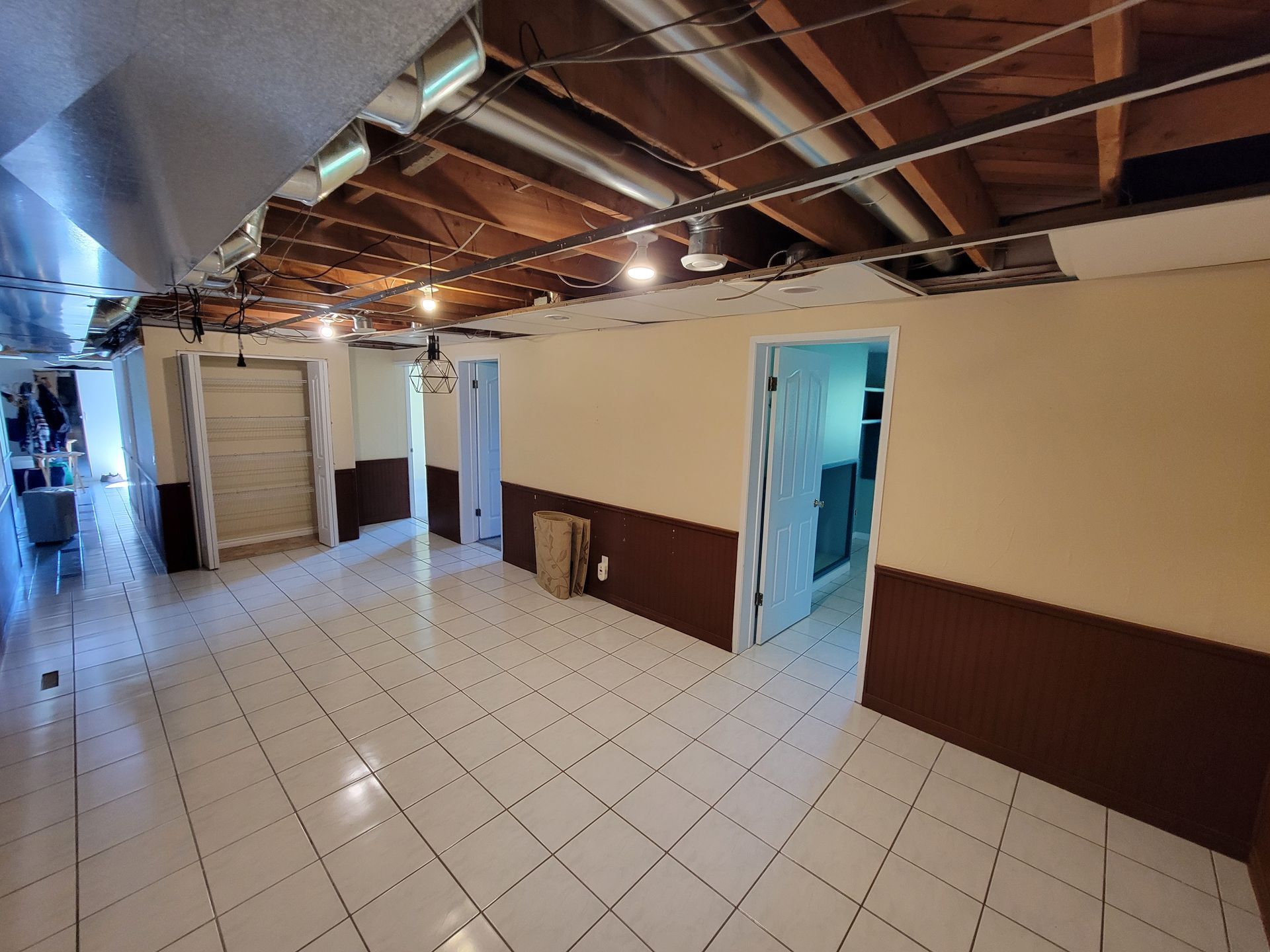
We’re paying attention to things like ceiling heights,
electrical wiring, bulkhead placement, bedroom window sizing, and the clearances required around mechanical equipment. These details quietly shape what the finished space can look like long before any walls are framed.
For example, ducting and bulkheads can reduce headroom if they aren’t planned around properly. Window sizes determine whether a bedroom can legally exist where you want it. Mechanical clearances can limit where walls are allowed to go, even if the layout looks good on paper.
You don’t need to know every rule. What helps most is understanding when an idea won’t work as imagined and what alternatives still achieve the same goal. When those conversations happen early, planning feels clearer and far less stressful.
Catching layout constraints before walls go up
Some layout constraints don’t become obvious until construction is underway, so they’re addressed during planning.
As planning continues, attention turns to things that can quietly limit the layout later on. Clearance around furnaces, ducting, and electrical panels often dictates where walls can be built. Door sizes and access paths affect how easily furniture, appliances, and even construction materials can move through the basement.
Smoke detector and fire alarm placement also needs to be accounted for before walls are closed and inspections begin.
These details are easy to overlook when the focus is on finished rooms. Catching them during planning helps prevent rework, schedule delays, and costs that often show up later in the build.
Which early decisions affect construction later on?
As planning takes shape, some of the conversations we have may sound like finishing details. In reality, many of those choices influence how the basement is built from the very beginning.
Talking through direction early helps ensure the structure supports how you actually want to use the space, instead of forcing changes once construction is already underway.
Ceiling and lighting decisions
Ceilings and lighting are good examples of choices that feel cosmetic but affect construction.
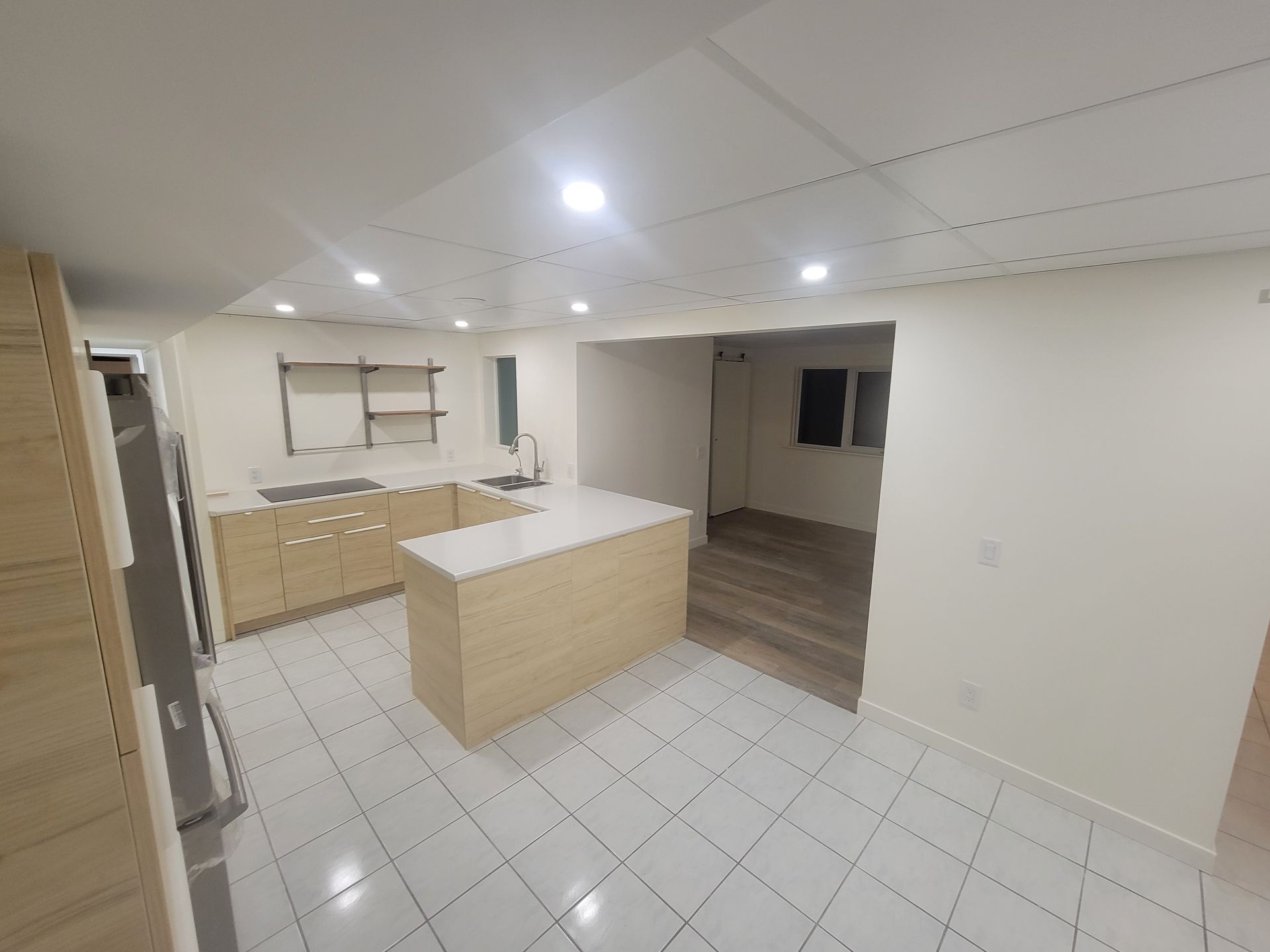
As we look at the ceiling height and layout, we’re already thinking about whether a drywall ceiling or a T-bar ceiling makes the most sense for the space. That decision affects how framing is laid out and how mechanical systems are routed above.
Lighting works the same way. Choosing between pot lights and central fixtures changes how electrical runs are spaced and where wiring needs to be planned. Even if the exact fixtures are selected later, understanding the direction allows framing and rough-ins to be done properly.
Mechanical room planning
Mechanical areas are another place where decisions have a significant impact.
During planning, we’re looking at how mechanical spaces will be accessed, how much clearance is required, and how those areas will be finished. These choices affect framing details, drywall backing, and how easily systems can be serviced long-term.
Addressing these items early helps avoid situations where access, clearance, or serviceability becomes an issue once the space is built out.
To see how planning decisions show up later on, you can read our
recent project breakdown of a full basement development in Edmonton.
How is planning different for a basement suite versus a regular basement?
Not all basement developments are planned the same way, and this usually becomes clear very early in the walk-through.
One of the first things we clarify together is whether you’re planning a regular basement development or exploring a legal basement suite. While both require thoughtful layout and usability planning, a suite introduces a much deeper layer of code requirements that need to be considered from the very beginning.
A regular basement is primarily about how the space functions for you and your family. A legal basement suite still needs to work well, but it also has to meet strict separation, safety, and servicing requirements that affect nearly every part of the build.
Additional considerations for basement suites
When a potential suite is part of the conversation, the focus quickly shifts to what needs to happen behind the walls.
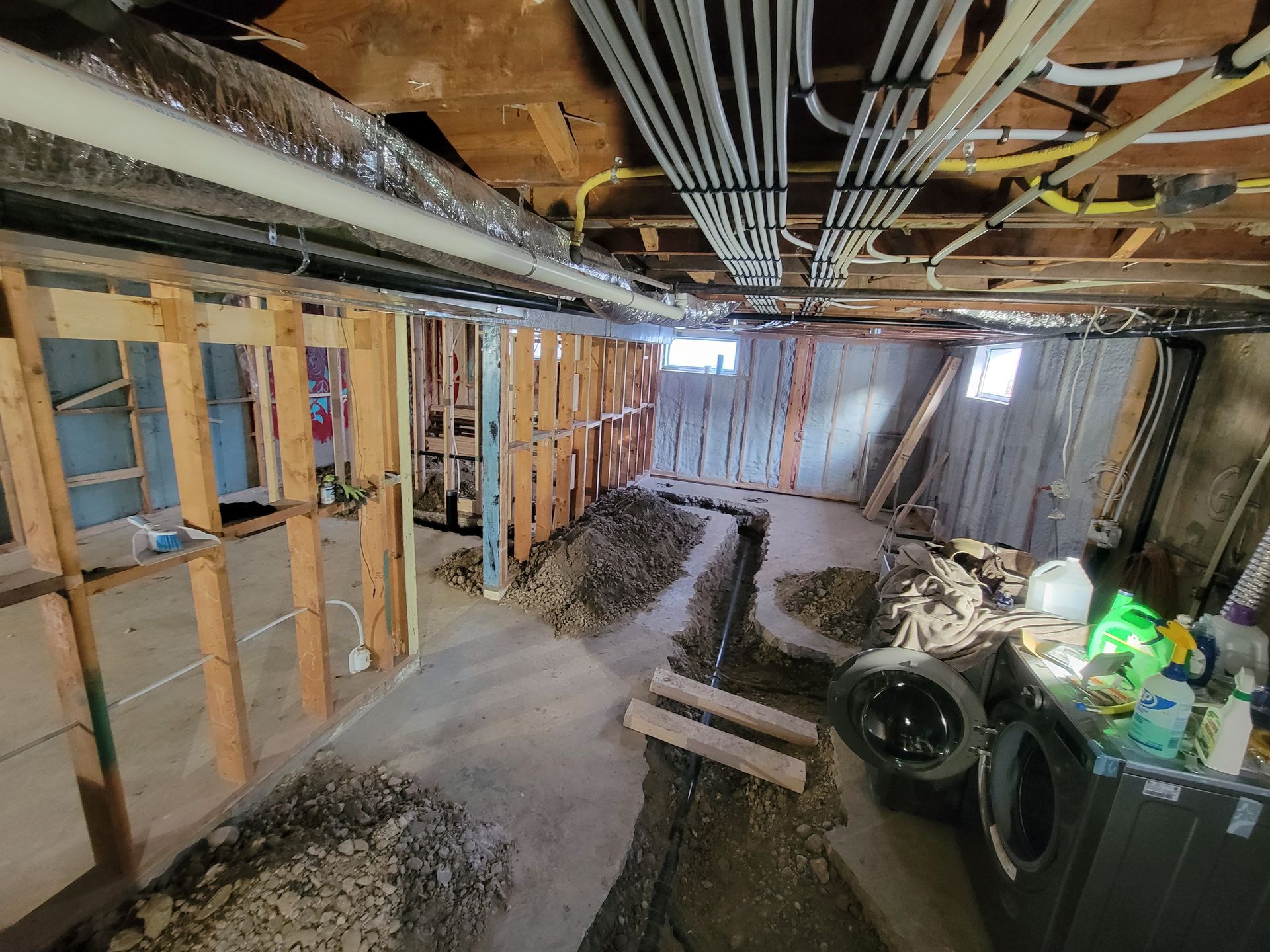
That includes fire separation and soundproofing between the upper and lower spaces, insulation systems that meet required ratings, and whether mechanical rooms will need to be fully drywalled. Electrical panels often need to be located in shared common spaces, and heating systems must be separated so air is not shared between units.
There are also additional electrical requirements, including load calculations and dedicated circuits for appliances. All of these factors influence how the basement can be laid out and how much flexibility exists within the space.
Many homeowners are surprised by how much extra work is involved, which is common in Edmonton basement suite projects. These requirements directly affect cost, layout options, and, in some cases, if a suite is even feasible in a particular home.
Knowing when a basement suite is not the right fit
One of the most valuable parts of the planning process is being honest about whether a basement suite makes sense in your specific house.
As we look at the space together, we’re considering things like entry options, mechanical layout, ceiling heights, and how separation could realistically be achieved. In some homes, making everything work properly would require changes that push the project far beyond what most homeowners expect.
In those situations, the right advice is sometimes to step back and rethink the plan. That honesty helps homeowners avoid investing time and money into a project that would only lead to frustration or unexpected costs later on.
If you are still gauging whether the numbers make sense for your situation, our
Edmonton basement development cost breakdown covers what different project types typically run and what shifts the price.
What is the real goal of the first basement walk-through?
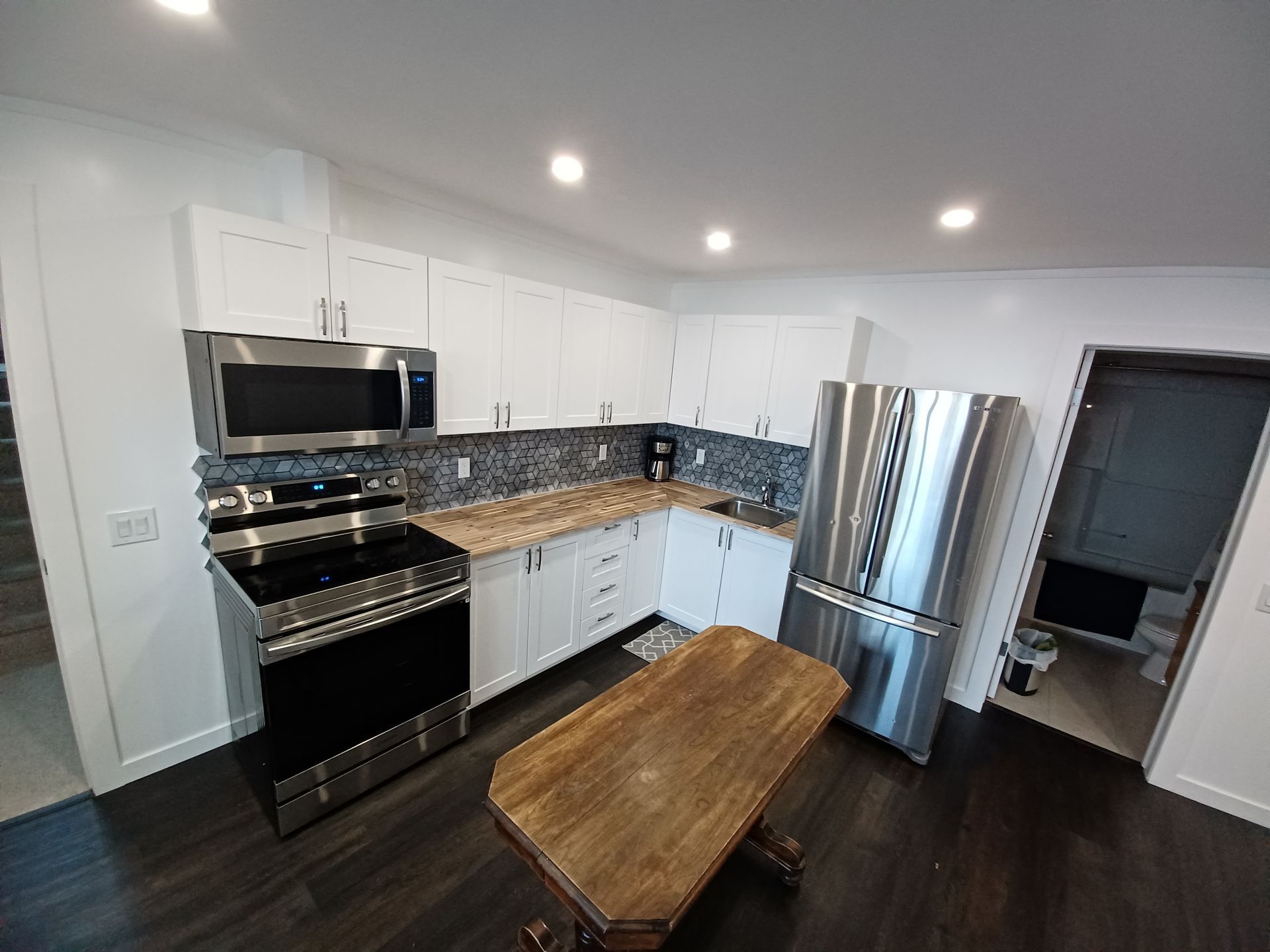
By the end of the first visit, the goal is for you to feel confident about the direction you’re heading before any real commitments are made.
During that initial walk-through, our focus is on listening first. We want to understand how you plan to use the space, what matters most to you, and where flexibility exists. At the same time, we’re identifying potential issues early and explaining them clearly, so there are no surprises later in the process.
You should walk away knowing your ideas were heard, the space was looked at honestly, and the guidance you received was based on real on-site experience rather than assumptions or shortcuts.
That approach is deliberate.
At Alpha-Omega Developments, we believe strong basement projects start with clear expectations, thoughtful planning, and honest conversations from the very beginning. Taking the time to walk through the space properly helps projects run smoother, inspections go cleaner, and decisions feel easier as the build moves forward.
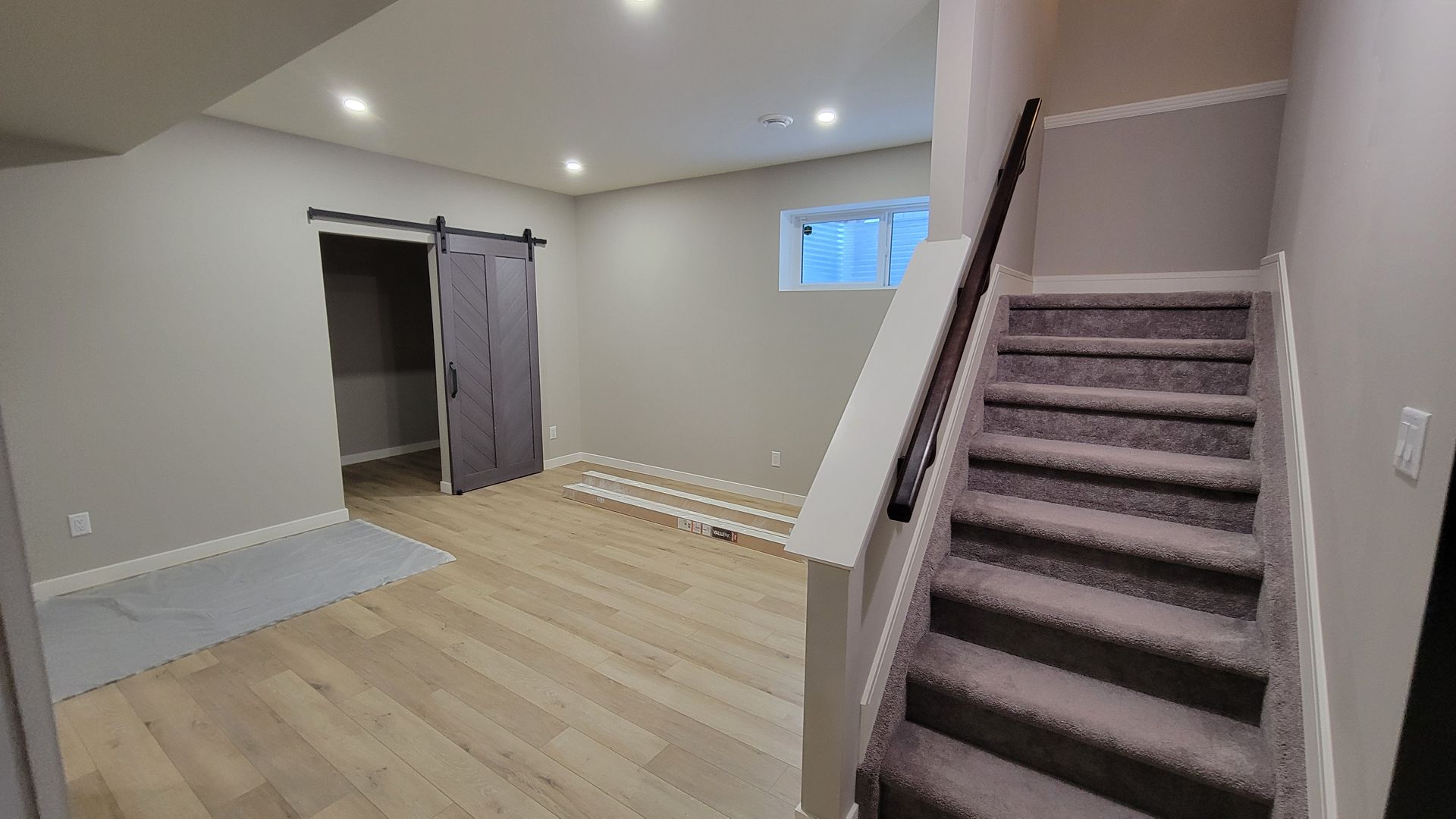
Next Steps for Planning an Edmonton Basement Development
If you’re considering a
basement development in Edmonton and want to understand what’s realistically possible in your home, the best next step is a proper walk-through.
It gives you the opportunity to ask questions, talk through ideas, and get experienced feedback before plans or pricing lock anything in. Even early in the process, that clarity can make a meaningful difference.
When you’re ready, reach out to book a basement walk-through with Alpha-Omega Developments and start your project with the right foundation in place.

Need a Quote?
Reach out to our team today for a quote or to discuss your next project.
Or call us at:
Recent Posts